Just musing to myself that all my successful long term campaigns have had the following format:
1. PCs start out in a safe and relatively familiar location, eg "You all meet at the Inn"; though it can be a castle or Pathfinder lodge, etc.
2. PCs hear the "call to adventure" - whether the greybeard in the corner with Quest to Save World, or just rumours of treasure
3. PCs go to adventure site, do stuff, then come back.
So, basically the "Hero's Journey".
Now, sometimes - often - the PCs eventually relocate their Home Base, eg they might move to a new Inn, or gain their own Castle. But the safe & familiar starting point seems to be very important for long term play. If I start the game as GM/am started as player with PCs on the run, looking for safety, or crashed on an unfamiliar & dangerous planet/island, it never works out. All player energy goes into establishing safety - creating that safe home base, or reaching a safe place - at which point the game feels 'done'. The energy dissipates.
Anyone else had this experience? Is it just me?
Sunday, 10 March 2019

Monday, 11 February 2019
Going All The Way (updated 13/4/19)
Update: Quillax levelled up to 20 today, 13/4/2019!
As GM I've had 2 5e PCs reach level 20 (I mostly do individual XP); only one (now two) from 1st - in my Wilderlands 5e game Hakeem the Barbarian got from level 1 (March 20th 2015) to level 20 (September 15th 2017) in 132 online sessions, about the same as 66 offline sessions, over two and a half years. Played on a bit after that with Epic Boons.
In my tabletop 5e Runelords game Quillax the Druid got from level 1 (November 2015) to 18 (end October 2017) in 2 years and 64 tabletop sessions each of around 4-5 hours; we recently restarted as an online game now Quillax's player is a globetrotter - http://smonscurseofthecrimsonthrone.blogspot.com/ - so could make 20 yet!
Update: After resuming play & 12 online sessions, reached 20th on 13/4/19.
But I've also had 60-80 session campaigns with no PCs getting over level 10. In my 4e Loudwater game http://frloudwater.blogspot.com/ Lirael the Ranger went 1st (ca April 2011) to 30th (August 2016) in 103 tabletop sessions and something over 5 years of play; she reached level 20 in session 71 - http://frloudwater.blogspot.com/2014/07/session-71-17-1811483-remorhaz-tower.html - July 2014, so a bit over 3 years. That was a 'party XP' game.
As GM I've had 2 5e PCs reach level 20 (I mostly do individual XP); only one (now two) from 1st - in my Wilderlands 5e game Hakeem the Barbarian got from level 1 (March 20th 2015) to level 20 (September 15th 2017) in 132 online sessions, about the same as 66 offline sessions, over two and a half years. Played on a bit after that with Epic Boons.
In my tabletop 5e Runelords game Quillax the Druid got from level 1 (November 2015) to 18 (end October 2017) in 2 years and 64 tabletop sessions each of around 4-5 hours; we recently restarted as an online game now Quillax's player is a globetrotter - http://smonscurseofthecrimsonthrone.blogspot.com/ - so could make 20 yet!
Update: After resuming play & 12 online sessions, reached 20th on 13/4/19.
But I've also had 60-80 session campaigns with no PCs getting over level 10. In my 4e Loudwater game http://frloudwater.blogspot.com/ Lirael the Ranger went 1st (ca April 2011) to 30th (August 2016) in 103 tabletop sessions and something over 5 years of play; she reached level 20 in session 71 - http://frloudwater.blogspot.com/2014/07/session-71-17-1811483-remorhaz-tower.html - July 2014, so a bit over 3 years. That was a 'party XP' game.
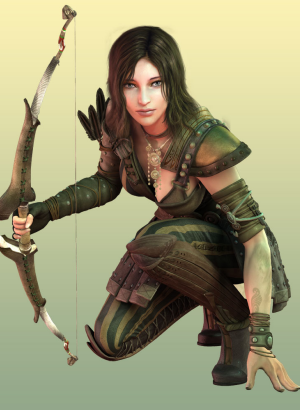 |
| Lirael, Queen of the Shining Vale, Ranger-30 (4e D&D) |
 |
| Hakeem the Destroyer, Barbarian-20 |
 |
| Quillax, Warden of Jorgenfist (Druid-20) may look a bit like this. |
 |
| Shieldbiter, Barbarian-20 (from 10th). |
Friday, 18 January 2019
My new XP system
I'm about to start two new 5e campaigns, and I decided to use a completely different XP system, almost identical. Basically the idea is 1 XP per significant encounter or achievement, such as a quest completion or big treasure haul, 2-3 XP in exceptional cases.
1. For Princes of the Apocalypse running for ca 5 hours 1/4 weeks, initially 5 XP 1st to 2nd and 2nd to 3rd, then 10 XP/level.
2. For Primeval Thule running for ca 3.5 hours 1/2 weeks , a flat 10 XP per level, but I am giving PCs a hit point kicker at 1st level (hp = full CON + max hd, rather than max hd plus CON bonus) so they can stay at 1st level for longer.
This will resemble the fiat 'milestone levelling' suggested method, but I wanted a bit more structure than that, and one better suited to sandboxy play. I'm looking for about 2-3 sessions of play per level (10 XP), which is the 5e DMG suggested rate, but much faster than in my current 5e games, which use the standard XP rules.
Discussion here
1. For Princes of the Apocalypse running for ca 5 hours 1/4 weeks, initially 5 XP 1st to 2nd and 2nd to 3rd, then 10 XP/level.
2. For Primeval Thule running for ca 3.5 hours 1/2 weeks , a flat 10 XP per level, but I am giving PCs a hit point kicker at 1st level (hp = full CON + max hd, rather than max hd plus CON bonus) so they can stay at 1st level for longer.
This will resemble the fiat 'milestone levelling' suggested method, but I wanted a bit more structure than that, and one better suited to sandboxy play. I'm looking for about 2-3 sessions of play per level (10 XP), which is the 5e DMG suggested rate, but much faster than in my current 5e games, which use the standard XP rules.
Discussion here
Friday, 14 September 2018
Uncertainty in RPG Worlds
Uncertainty - where even the GM does not know, has not defined, the truth of the matter.
I find this dramatically very powerful.
For instance, in my Wilderlands, two young lovers, Cassandra the Druidess & Polyachus the Apollo priest, both fairly major NPCs. and Cassandra a very long term NPC from a previous campaign, had taken shelter on a remote island to escape the evil Archmage Oriax. Unfortunately that island was later occupied by evil Skandik pirates, and it was assumed the lovers had met a terrible fate. But when the Skandiks had left, and others arrived on the island, they found only beautiful songbirds, never seen before. The legend grew up that the gods had taken pity on the lovers and transformed them into birds, and the birds now seen on the isle are their offspring.
I have no intention of ever proclaiming - or deciding - a definitive truth of the matter.
I do this with other Big Mysteries of the campaign, such as whether or not the gods really exist. I have my suspicions, but have no intention of forming a definitive answer.
I find this approach makes the campaign world feel much more real to me. I've noticed that some other designers use this sort of ambiguity, eg in the Elder Scrolls CRPGs, as a way to create depth and mystery.
Anyone else do this? Is it a common practice?
I find this dramatically very powerful.
For instance, in my Wilderlands, two young lovers, Cassandra the Druidess & Polyachus the Apollo priest, both fairly major NPCs. and Cassandra a very long term NPC from a previous campaign, had taken shelter on a remote island to escape the evil Archmage Oriax. Unfortunately that island was later occupied by evil Skandik pirates, and it was assumed the lovers had met a terrible fate. But when the Skandiks had left, and others arrived on the island, they found only beautiful songbirds, never seen before. The legend grew up that the gods had taken pity on the lovers and transformed them into birds, and the birds now seen on the isle are their offspring.
I have no intention of ever proclaiming - or deciding - a definitive truth of the matter.
I do this with other Big Mysteries of the campaign, such as whether or not the gods really exist. I have my suspicions, but have no intention of forming a definitive answer.
I find this approach makes the campaign world feel much more real to me. I've noticed that some other designers use this sort of ambiguity, eg in the Elder Scrolls CRPGs, as a way to create depth and mystery.
Anyone else do this? Is it a common practice?
Wednesday, 29 August 2018
5e - Slowing advancement after Level 10
The 5e XP table is designed to speed up advancement after level 10. Discussion on doing the opposite here for a megadungeon sandbox campaign with PCs of various levels. Conclusion is that simply halving XP awards to level 11+ PCs should work best, giving the following effective requirements:
10 to 11: 21000 > 21,000 XP as per RAW
11 to 12:15000 > 30,000
12 to 13 20000 > 40,000
13 to 14 20000 > 40,000
14 to 15 25000 > 50,000
15 to 16 30000 > 60,000
16 to 17 30000 > 60,000
17 to 18 40000 > 80,000
18 to 19 40000 > 80,000
19 to 20 50000 > 100,000
10 to 11: 21000 > 21,000 XP as per RAW
11 to 12:15000 > 30,000
12 to 13 20000 > 40,000
13 to 14 20000 > 40,000
14 to 15 25000 > 50,000
15 to 16 30000 > 60,000
16 to 17 30000 > 60,000
17 to 18 40000 > 80,000
18 to 19 40000 > 80,000
19 to 20 50000 > 100,000
Tuesday, 7 August 2018
Going Epic-10 in 5e D&D
I suggest to DMs that if they are running a story-based, low combat game in a lowish-fantasy setting, then go “E10” – levels should be capped at 10 not 20, and use the Epic rules in the DMG from 10th level: every 30,000 XP above level 10, a PC either gains +2 attribute (I’d retain cap at 20, maybe 22); or if the game uses Feats the PC can gain a Feat of the player's choice.
Character Advancement
Experience Points Level Proficiency Bonus
0 1 +2
300 2 +2
900 3 +2
2,700 4 +2
6,500 5 +3
14,000 6 +3
23,000 7 +3
34,000 8 +3
48,000 9 +4
64,000 10 +4
94,000 E1 +4
124,000 E2 +4
154,000 E3 +4
+30,000 +1 +4
Edit: The Primeval Thule 5e setting seems particularly suitable for this approach.
Character Advancement
Experience Points Level Proficiency Bonus
0 1 +2
300 2 +2
900 3 +2
2,700 4 +2
6,500 5 +3
14,000 6 +3
23,000 7 +3
34,000 8 +3
48,000 9 +4
64,000 10 +4
94,000 E1 +4
124,000 E2 +4
154,000 E3 +4
+30,000 +1 +4
Edit: The Primeval Thule 5e setting seems particularly suitable for this approach.
Sunday, 29 July 2018
A Fighter Attacks house rule for OD&D to 1e/2e AD&D
I don't much like the Fighter ability to get his level in attacks/round vs 1 hd (or 0-level in 1e) foes, since it requires the GM to tell the player how many hd the enemy have, or the player has to constantly ask. It's also a bit silly at higher level IMO. But without some kind of multi attack Fighters can be seriously underpowered at higher level. I'm also not a fan of weapon specialisation bonuses to hit & damage, they change the balance of weapons and make two-handed high damage weapons underpowered; it also favours missile weapons with a high attack rate.
Somewhat influenced by 5e's insight that you can give staggered attacks/round bonuses to fighters without breaking the game (in 5e at 5th, 11th & 20th) matching where other classes like wizard/MU get big spell boosts, and wanting to restore the importance of Hero (4th) & Supehero (8th) levels, I came up with the following, specifically for my Swords & Wizardry game but it should work in all pre-3e D&D, especially if 18%-strength is not in play - so ideal for OD&D and BX-BECMI.
Fighters get +1 attack to the weapon normal attack rate at the following levels: 2nd, 4th & 8th. For melee weapons this gives an attack rate as follows:
Fighter
Level #Attacks
1 1
2-3 2
4-7 3
8+ 4
Fighter subclasses such as Paladin & Ranger (& Cavalier, Barbarian etc) get bonus attacks at 4th & 8th only, giving the following attack rates for melee weapons
Paladin & Ranger
Level #Attacks
1-3 1
4-7 2
8+ 3
So far this seems to work really well. I've tweaked Ranger bonus damage vs giant class creatures to take account of the increased number of attacks:
Ranger Level 1-5 Bonus damage +1/level
Ranger Level 6-15 Bonus damage +1/2 levels:
Level Bonus
7 +6
9 +7
11 +8
13 +9
15 +10 (max)
MUs and Thieves get +1 attack at 8th.
Clerics get +1 attack at 7th.
Update: polite, intelligent conversation here. :D
Somewhat influenced by 5e's insight that you can give staggered attacks/round bonuses to fighters without breaking the game (in 5e at 5th, 11th & 20th) matching where other classes like wizard/MU get big spell boosts, and wanting to restore the importance of Hero (4th) & Supehero (8th) levels, I came up with the following, specifically for my Swords & Wizardry game but it should work in all pre-3e D&D, especially if 18%-strength is not in play - so ideal for OD&D and BX-BECMI.
Fighters get +1 attack to the weapon normal attack rate at the following levels: 2nd, 4th & 8th. For melee weapons this gives an attack rate as follows:
Fighter
Level #Attacks
1 1
2-3 2
4-7 3
8+ 4
Fighter subclasses such as Paladin & Ranger (& Cavalier, Barbarian etc) get bonus attacks at 4th & 8th only, giving the following attack rates for melee weapons
Paladin & Ranger
Level #Attacks
1-3 1
4-7 2
8+ 3
So far this seems to work really well. I've tweaked Ranger bonus damage vs giant class creatures to take account of the increased number of attacks:
Ranger Level 1-5 Bonus damage +1/level
Ranger Level 6-15 Bonus damage +1/2 levels:
Level Bonus
7 +6
9 +7
11 +8
13 +9
15 +10 (max)
MUs and Thieves get +1 attack at 8th.
Clerics get +1 attack at 7th.
Update: polite, intelligent conversation here. :D
Subscribe to:
Posts (Atom)